

 Shahriar Lahouti
21 June 2026 by Shahriar Lahouti.
CONTENTS
- Preface
- ⚡️Rapid Review
- Physiology of Circulation
- Physiology of Shock
- 🚨Conceptual Framework of Shock
- The Dynamic Tool – The Forrester-Kenny Diagram
- New Clinical Workflow
- Conclusion: The Art of Resuscitation
- 🤕Clinical Vignette
- Reading More
- 📽️Media
- References
Preface
Over the past decade, we have made tremendous strides in understanding and managing shock. The core principles I have outlined on RECAPEM—recognizing shock as tissue hypoperfusion rather than mere hypotension, leveraging POCUS for rapid phenotyping, and individualizing vasoactive therapy—remain the bedrock of modern resuscitation.
Yet, as we all know, the sickest patients often defy simple categorization. The septic patient who remains hypotensive after 2 liters of fluid and norepinephrine. The patient with a normal blood pressure but a lactate of 4 and cold, mottled legs. The patient with “cardiogenic shock” who worsens with inotropes. These patients force us to ask: “Now what?”
Recent advances in our conceptual understanding of circulatory physiology offer a way out of this dilemma. We do not replace our existing approach. Rather, we provide a unifying “operating system” that sits beneath it, allowing us to understand why a patient is failing and where the weak link lies.
This article introduces that framework. It is not for the straightforward patient who responds to a fluid bolus, nor is it for the actively crashing patient who requires immediate life-saving interventions. Rather, it is designed for the complex, deteriorating patient in whom immediate life threats (tension pneumothorax, tamponade, massive hemorrhage, AAA) have been ruled out, but who remains in shock and requires a more granular, physiology-based approach to identify the weakest link in the circulatory chain.
⚡️RAPID REVIEW: HOW TO APPROACH HEMODYNAMIC ASSESSMENT
- Clinical Exam: MAP, DBP, SBP, PP, CRT
- Pulse Ox Waveform and PI
- Mottling, Skin Temperature, Mentation
- Perform CRUSH Exam if crashing (see footnote)
- Rule out immediate life threats
- Secure ABCs
- Treat life threats (tension, tamponade, hemorrhage)
- Start vasopressors early
- Source control
- Place patient on Forrester‑Kenny grid
- Warm/Cold × Wet/Dry
- Provides preliminary therapeutic strategy
- (First step in interface model)
- Perform I‑RUSH (see footnote)
- Map the 4 interfaces
- Identify the weakest link
- Target the weakest interface
- Fluids (if preload-responsive)
- Vasopressors / Inotropes
- Afterload/Preload manipulation
- Diuresis / RV support
- The most important step
- Re-plot on Forrester-Kenny grid
- Re-check CRT & lactate
- Repeat I‑RUSH views
- Aim for Quadrant 1
Physiology of Circulation
Anatomic backbone
The primary function of the cardiovascular system is to ensure optimal conditions for organ function—a state best described as effective tissue perfusion.
Perfusion alone, however, is merely delivery. True physiological effectiveness requires more than just blood flow; it demands that the delivered blood is utilized by the tissues to meet their metabolic demands.
⎮Effective Tissue Perfusion = Delivery + Utilization
- This concept is defined as adequate blood flow that satisfies tissue oxygen demand (DO₂) and supports efficient oxygen extraction. As we will explore, it is possible to have flow without function—for example, warm extremities with a rising lactate—where perfusion is present but not yet effective.
- The ultimate goal of resuscitation in critically ill patients is to restore and maintain effective tissue perfusion.
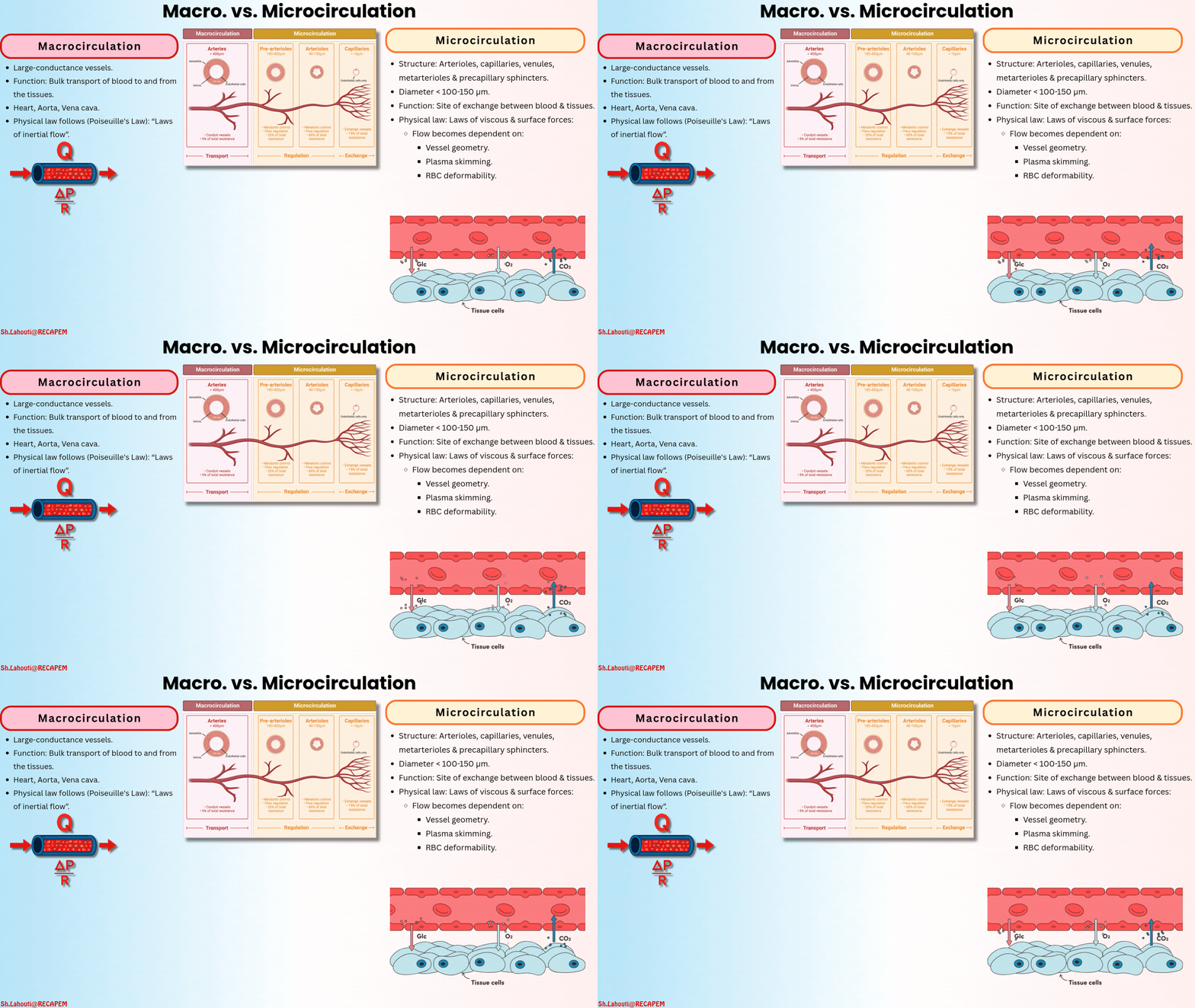
Effective tissue perfusion depends on the seamless integration of two interconnected circulatory compartments:
-
Upstream (Macrocirculation): The heart, great vessels, and conduit arteries generate the pressure and flow that drive blood through the organs.
-
Downstream (Microcirculation): The small vessels and capillaries regulate the distribution of flow, facilitate oxygen and nutrient delivery, and enable the removal of metabolic waste products such as carbon dioxide.
Flow vs. Pressure: The Fundamental Distinction
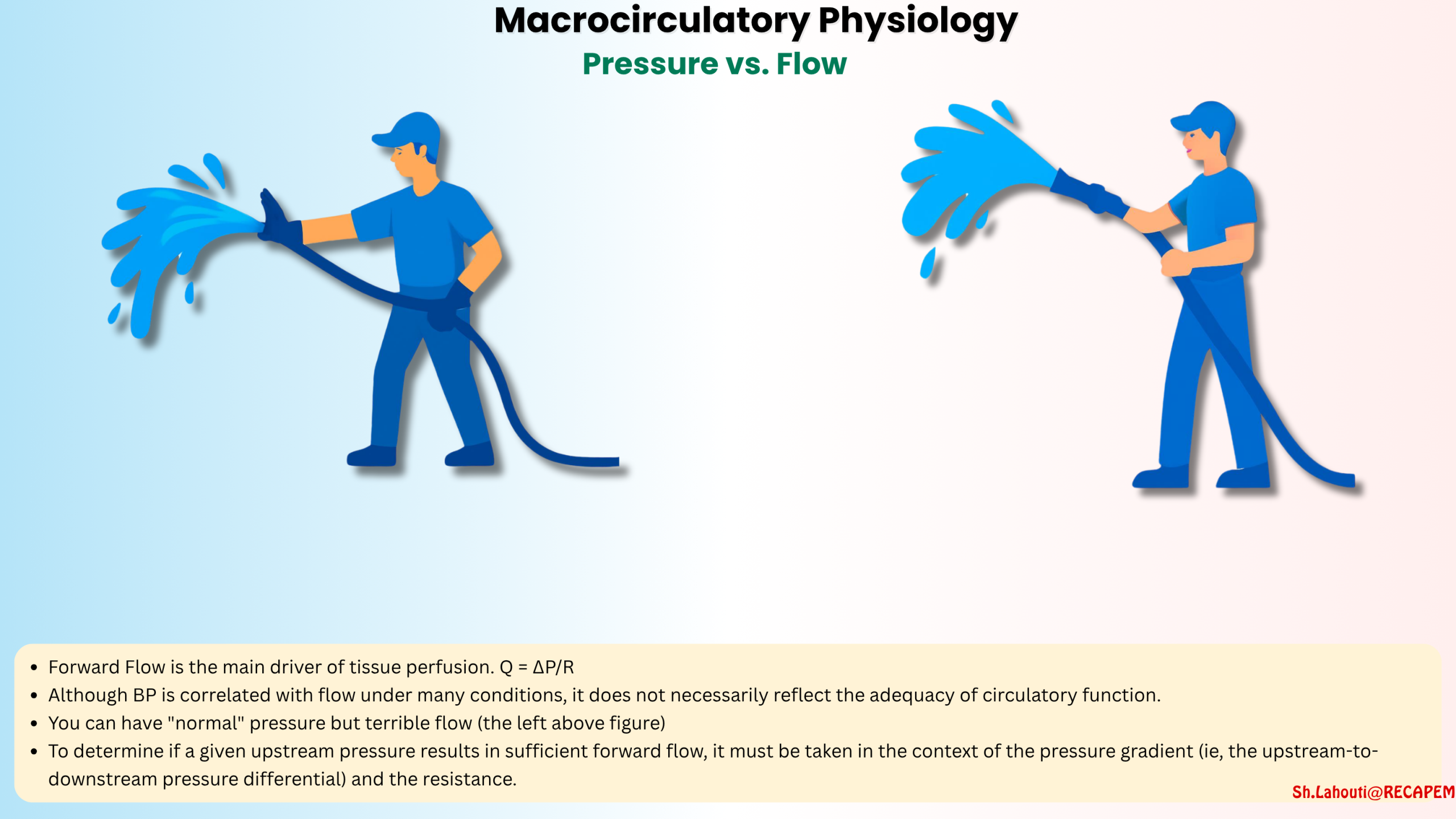
- At the macrocirculatory level, forward flow is one of the main determinants of tissue perfusion.
- The relationship between flow (Q), pressure gradient (P), and resistance (R) is a foundational concept of cardiovascular physiology:
-
This equation tells us that flow is determined by the pressure gradient (upstream-to-downstream) and the resistance.
- It is important to distinguish flow from pressure in clinical practice.
-
Flow refers to the volume of fluid moving through a vessel over time. This is what ultimately matters for tissue perfusion.
- Pressure refers to the force exerted per unit area.
- Pressure is the driving force that generates flow, but pressure alone does not guarantee adequate flow.
-
The table below illustrates that a normal MAP can be misleading if it is maintained by excessive vasoconstriction rather than adequate cardiac output.
-
- Pressure is the driving force that generates flow, but pressure alone does not guarantee adequate flow.
-
- Forward flow requires conversion of unstressed volume into pressure (via vascular tone and cardiac contraction).
- A fundamental principle of circulatory physiology is that volume does not contribute to flow unless it is under tension (stressed).
- The total intravascular volume is partitioned into stressed volume (under tension, generating pressure and driving venous return) and unstressed volume (filling the vasculature without generating pressure).
- A fundamental principle of circulatory physiology is that volume does not contribute to flow unless it is under tension (stressed).
🩺 Clinical Implications of the Flow-Pressure Relationship:
- Blood pressure usually correlates with flow but does not necessarily reflect adequate tissue perfusion.
- To determine if a given pressure results in sufficient forward flow, it must be evaluated in the context of:
- Pressure gradient (upstream-to-downstream differential)
- Resistance
The Relationship Between MAP, CO, SVR, and CVP
◾️Blood pressure is not a single number—it is the product of several key variables:
- Mean Arterial Pressure (MAP) is the average pressure in the arterial system.
- Cardiac Output (CO) is the volume of blood pumped by the heart per minute (CO = SV × HR).
- Systemic Vascular Resistance (SVR) is the resistance the heart must overcome to eject blood into the systemic circulation.
- Central Venous Pressure (CVP) is the downstream pressure in the venous system that acts as a back pressure to forward flow.
- Why does CVP matter? While CVP is often small (~5–10 mmHg) and is sometimes ignored in the simplified equation (MAP ≈ CO × SVR), it becomes critically important when elevated. A high CVP, as seen in RV failure, volume overload, or pulmonary hypertension, can significantly reduce the effective perfusion pressure (MAP − CVP) and compromise tissue perfusion.
- Perfusion Pressure is MAP – CVP
-
- Clinical Implications of This Relationship
-
A normal MAP does not guarantee adequate perfusion. It must be interpreted in the context of how it was achieved (CO vs. SVR) and the downstream pressure (CVP).
- The effective perfusion pressure is MAP − CVP.
-
A patient with a MAP of 65 and a CVP of 5 has a perfusion pressure of 60. A patient with a MAP of 65 and a CVP of 20 has a perfusion pressure of only 45, despite the same MAP.
-
- Treating the number (MAP) without understanding its components can be harmful.
- In a patient with low CO and high SVR, increasing vasopressors will worsen the problem by further increasing afterload and potentially dropping cardiac output.
- In a patient with elevated CVP, the goal may be to lower the back pressure (e.g., with diuresis or RV support) rather than to increase forward pressure.
-
- Clinical Implications of This Relationship
◾️Not All MAPs Are Created Equal
- The equation MAP = (CO × SVR) + CVP illustrates why a given MAP can be achieved in very different ways, with very different implications for tissue perfusion.
- This is the single most important concept to internalize. Consider two patients, both with a MAP of 65:
◾️Why does this matter?
- In Patient B, increasing vasopressors will worsen the problem by further increasing afterload and potentially dropping cardiac output.
- The correct therapy is to improve forward flow—with inotropes, or by reducing the back pressure (e.g., lowering CVP or LVEDP).
💡Takeaway: “This is why we must treat the physiology, not just the number.” A MAP of 65 is not a single number. It is a mathematical product (MAP = CO x SVR). Before you treat the number, you must understand what is generating it.
Physiology of shock
Now that we have established the principles of normal circulatory physiology, the critical distinction between flow and pressure, the relationship between MAP, CO, SVR, and CVP, and the concept of stressed volume, we can examine how these principles are disrupted in shock.
Shock is not a single disease but a final common pathway of circulatory failure. At its core, shock represents a failure to deliver adequate oxygen and nutrients to meet tissue demands. This failure can arise from derangements at any point in the circulatory chain.
🚨Shock is not equal to hypotension. Two central issues underlie the common misconception that hypotension defines shock:
- The complex relationship between the microcirculation and macrocirculation.
- Improvements in MAP or CO do not always translate to improvements in tissue perfusion, the concept of hemodynamic incoherence. When coherence is lost, you can have a “normal” blood pressure but persistent tissue hypoxia, reflected by a prolonged CRT or elevated lactate.
- Read more on loss of coherence of micro- and macrocirculation here.
- Improvements in MAP or CO do not always translate to improvements in tissue perfusion, the concept of hemodynamic incoherence. When coherence is lost, you can have a “normal” blood pressure but persistent tissue hypoxia, reflected by a prolonged CRT or elevated lactate.
- The critical distinction between pressure and flow in macrocirculatory physiology (discussed above).
- As we have illustrated, a normal MAP can be misleading if it is maintained by excessive vasoconstriction rather than adequate CO.
📖Read more on pathophysiology of shock here.
◾️The Pitfalls of the Conventional Four-Category Classification
- The current approach to shock has remained oversimplified, despite the depth of our scientific understanding of circulatory physiology complexity. The conventional approach to shock can lead to several critical problems.
◾️The Clinical Relevance of These Limitations
- These pitfalls are not merely academic. They have direct consequences for patient care:
-
Failure to identify shock. Reliance on hypotension means shock is easily overlooked in patients who are not hypotensive, particularly those with robust compensatory mechanisms.
-
Misdiagnosis of shock etiology. Clinicians are often most comfortable diagnosing shock states defined by reduced forward pressures, such as hypovolemia or vasodilation. Shock states that predominantly involve elevated back pressures are frequently underrecognized.
- Constrained shock management repertoire. The narrow focus on forward pressure frequently extends to therapeutic decision-making, limiting the clinician’s repertoire to a narrow set of stereotyped interventions.
- For example, while clinicians tend to be very comfortable administering fluids and vasopressors in a patient with shock due to Gram-negative bacteremia, they are often reluctant to administer diuretics and vasodilators in a hypotensive patient with acute de-
compensated left ventricular failure.
- For example, while clinicians tend to be very comfortable administering fluids and vasopressors in a patient with shock due to Gram-negative bacteremia, they are often reluctant to administer diuretics and vasodilators in a hypotensive patient with acute de-
-
Difficulty with recognition and management of mixed shock states. Many patients exhibit overlapping shock phenotypes, yet diagnostic and therapeutic frameworks tend to force classification, and therefore management strategy—into a single category.
-
You know these patients well. They are the reason we continue to refine our approach.
- The Occult Shock Patient: A 55-year-old with a history of hypertension and heart failure presents with abdominal pain and vomiting. BP is 145/90, HR 110. He looks unwell. Lactate is 3.2. He is not hypotensive. Is he in shock? How do you decide?
- The Septic Shock Patient: A 65-year-old with pneumonia and septic shock. You gave 2L of balanced crystalloid and started norepinephrine. The MAP is now 68, but the lactate is still 4, the patient is oliguric, and the CRT is 5 seconds. The four-category framework tells you this is “distributive” shock. But why isn’t the patient improving?
- The Mixed Shock Patient: A 70-year-old with known severe aortic stenosis and recent chemotherapy presents with fever and hypotension. The echo shows a hyperdynamic LV. Is this septic shock? Or cardiogenic shock unmasked by sepsis? Or both?
◾️The Need for a New Framework
- To overcome these limitations, we need a framework that:
- Recognizes shock as a continuum from physiologic stress to overt tissue hypoperfusion, rather than a binary state defined by hypotension.
- Shifts the focus from pressure to flow. Forward flow, the net sum of competing forward, backward, and external pressures, is the principal determinant of tissue perfusion.
- Allows for multiple concurrent disturbances. Rather than forcing a single-label diagnosis, the framework must account for overlapping phenotypes and mixed shock states.
- Provides a robust mental model for reassessment. When the patient does not respond to initial therapy, the clinician needs a structured approach to identify the weak link(s) in the circulatory chain.
This brings us to the Conceptual Framework of Shock, a physiology-based model that addresses each of these shortcomings and provides a practical roadmap for the complex, deteriorating patient.
Conceptual Framework of Shock
1. The Pressure Vector Mental Model
Background:
- Flow is what ultimately matters for tissue perfusion.
- The equation Q = ΔP/R is a foundational principle of circulatory physiology; however, there are several caveats in applying flow physiology at the bedside:
- Pressure and resistance are often viewed as isolated abstract concepts, rather than dynamic and interdependent components of a unified system that govern tissue perfusion.
- The flow equation does not account for clinically important causes of compromised forward flow (e.g., tension pneumothorax, cardiac tamponade).
Three Pressure Vectors
- Forward flow requires conversion of unstressed volume into pressure (via vascular tone and cardiac contraction), which must then overcome back pressure and external pressure (Figure Below). The net result is: Forward Flow = Forward Pressure – (Back Pressure + External Pressure) *.
- Tissue perfusion is determined by the vector sum of these competing pressures, not by any single variable in isolation.
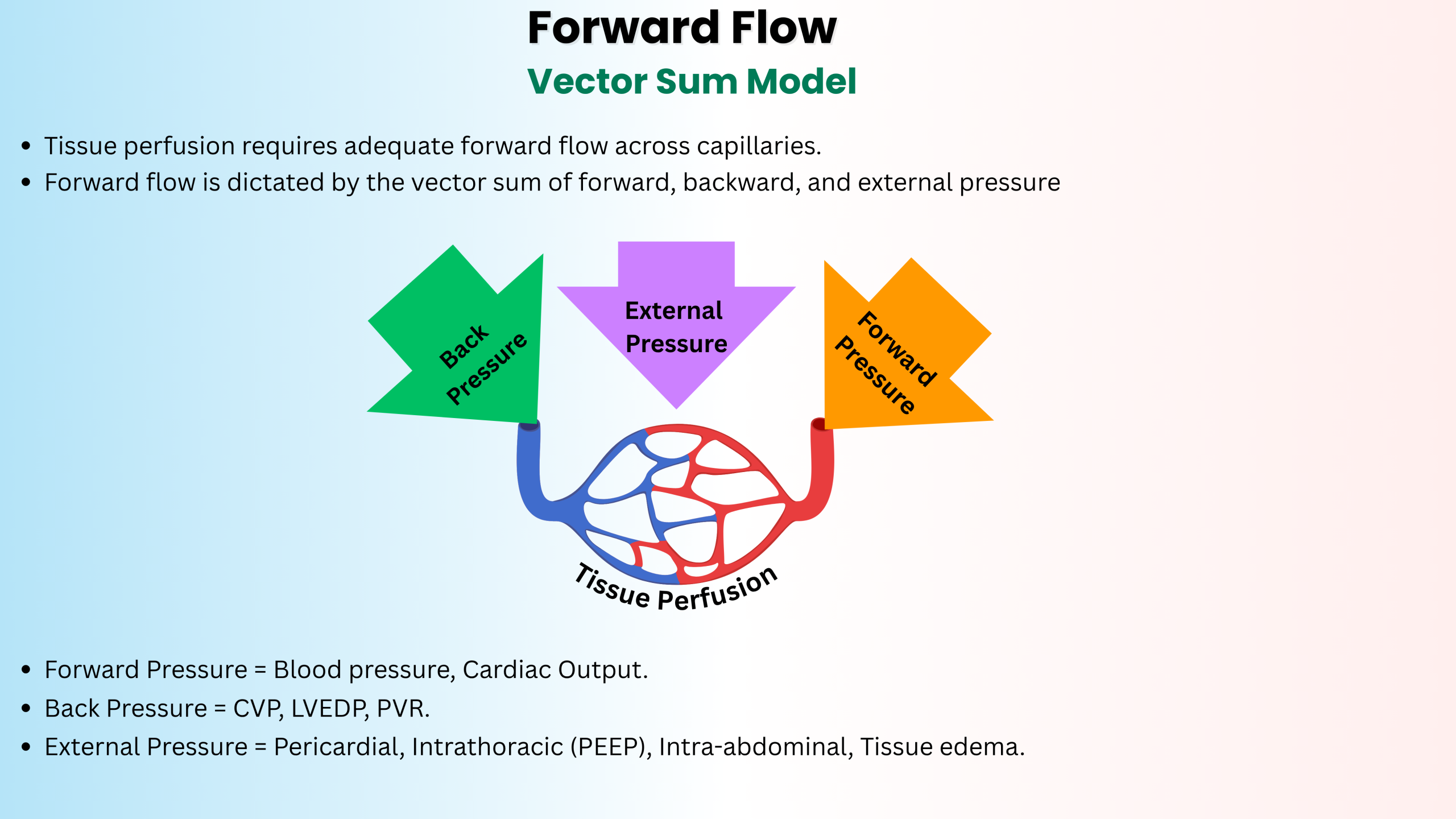
◾️Forward Pressures (The “Push”): These are the forces that drive blood forward. They include:
- Mean Arterial Pressure (MAP) – the classic “perfusion pressure.”
- Cardiac Output (CO) – the volume of blood pumped.
- Stressed Volume – the portion of intravascular volume that is under tension and actively contributing to venous flow.
◾️Back Pressures (The “Choke”): These are the forces that oppose forward flow. They include:
- Central Venous Pressure (CVP) – the pressure at the end of the venous circuit.
- Systemic Vascular Resistance (SVR) – the resistance the LV must overcome.
- Pulmonary Vascular Resistance (PVR) – the resistance that RV must overcome.
- LV End-Diastolic Pressure (LVEDP) – the back pressure to LV filling.
◾️External Pressures (The “Squeeze”): These are forces external to the vessels that compress them. They include:
- Intrathoracic pressure (e.g., tension pneumothorax, PEEP)
- Pericardial pressure (e.g., cardiac tamponade)
- Intra-abdominal pressure (e.g., abdominal compartment syndrome)
- Extravascular tissue pressure (e.g., severe edema)
2. The Four-Interface Model
◾️Background
- The circulatory system operates at two interconnected levels. The macrocirculation (heart, great vessels, and conduit arteries) generates pressure and flow to deliver blood to organs. The microcirculation (arterioles, capillaries, and venules) is where oxygen and nutrients are exchanged with tissues.
- Two key principles are essential to understand before we dive into the four‑interface model:
- In the macrocirculation, flow is not equal to pressure (explained above).
- The microcirculation can dissociate from the macrocirculation. More on this here.
- Improvements in MAP or cardiac output do not always translate to improvements in tissue perfusion. This is the concept of hemodynamic incoherence.
- When coherence is lost, you can have a “normal” blood pressure but persistent tissue hypoxia—clinically reflected by a prolonged CRT or elevated lactate.
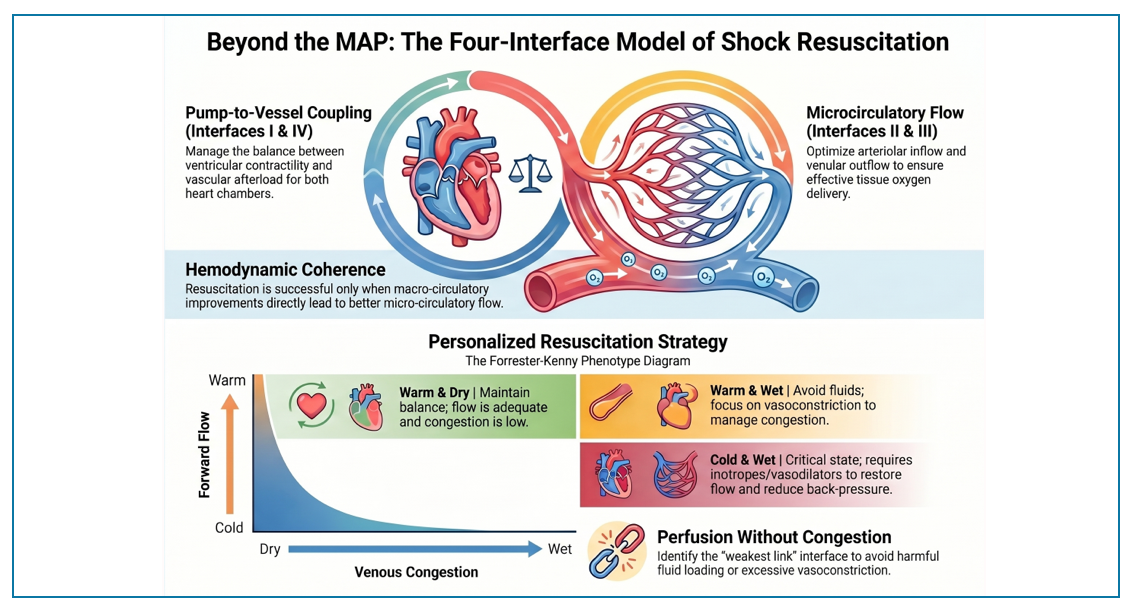
🚨The four‑interface framework described below provides a serial map of this macro‑to‑micro transition, helping you identify where the chain is breaking, whether it is a failure of forward flow (macrocirculation), a loss of coherence (microcirculation), or both.
- The Four-Interface Framework consists of a series of interfaces *.
- Shock occurs when there is “uncoupling” at any of four critical pressure interfaces in the circulatory chain.
- Your job as the clinician is to find the weakest link(s) and intervene at that level.
Mapping Forward & Back Pressures At Interfaces
The diagram below illustrates the serial chain of hemodynamic function. Blood flows from the left ventricle (LV) through four critical interfaces, each representing a potential point of failure *. An additional sub-interface (Ia) addresses the diastolic function *
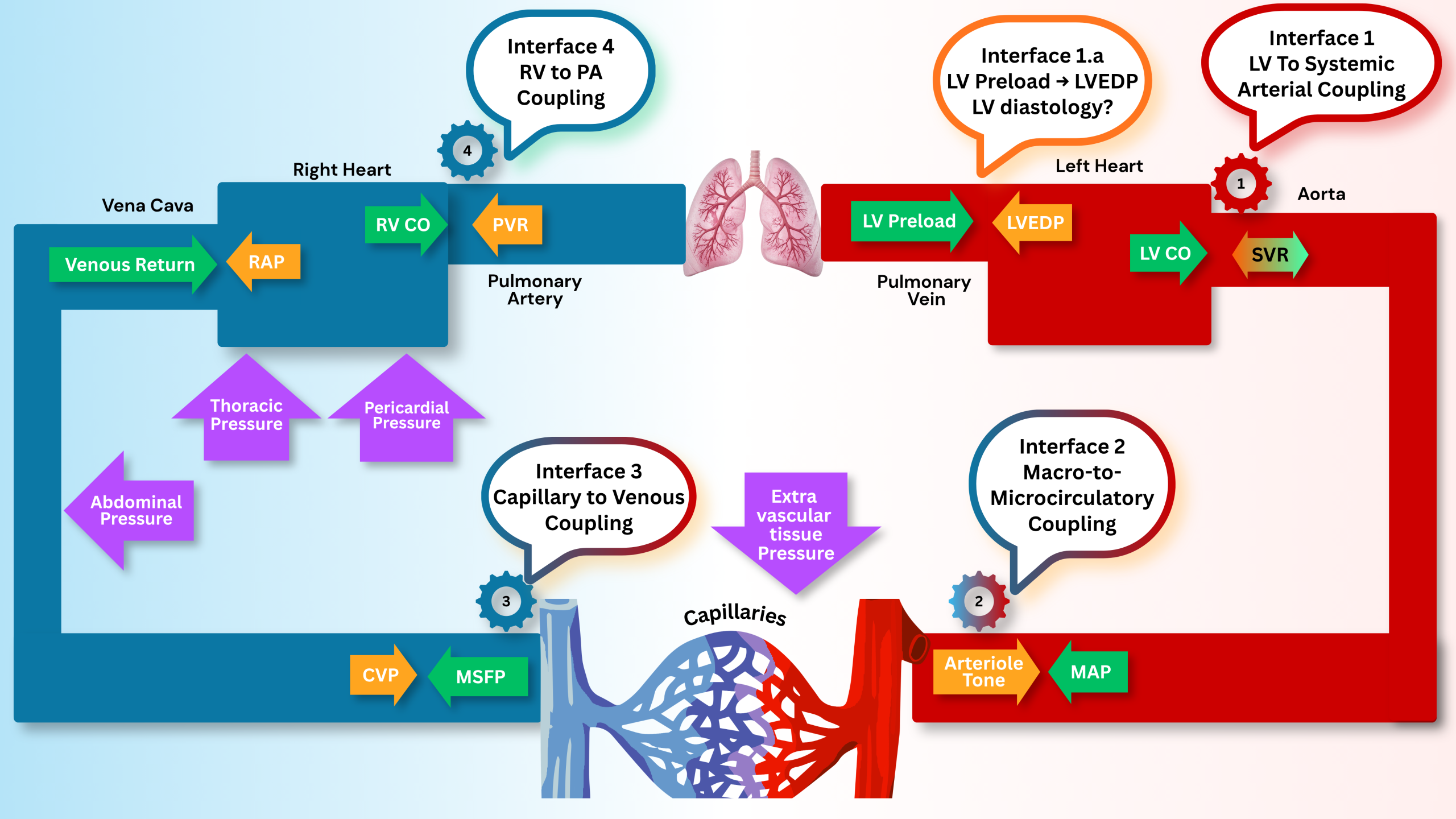
- Interface I (LV → Arteries): Assess Ventriculo-Atrial Coupling (VAC) and/or failure. Is the pump pushing blood forward? (Forward flow vs. afterload).
- Interface Ia (LV Preload → LVEDP): Assess Diastolic Function.
-
Is the LV stiff? Will volume help or hurt?
-
- Interface Ia (LV Preload → LVEDP): Assess Diastolic Function.
-
Interface II (Arterioles → Capillaries) (macro- to microcirculation) (Arterial MicroCirc): Assess Hemodynamic Coherence.
-
Is flow reaching the tissues?
-
-
Interface III (Capillaries → Venules) (Venous Microcir): Assess for Venous Congestion.
-
Interface IV (RV → Pulmonary Artery): Assess RV-PA Coupling.
-
Is the RV failing due to afterload? (Right heart function)
-
💡Finding the “weakest link” in this chain, whether at one interface or across multiple, is the key to personalized resuscitation.
Distinction: Coupling, Uncoupling, and Failure
◾️Before we dive into the details of each interface, we must clarify a fundamental distinction that is often misunderstood.
- Coupling refers to the ratio of elastances (compliance) between two structures. For the LV-arterial interface, coupling is expressed as Ea/Ees (arterial elastance divided by ventricular elastance). Normal coupling maximizes efficiency *.
- Uncoupling occurs when this ratio becomes abnormal (e.g., Ea/Ees > 1.0). This means the pump cannot overcome the load—the relationship between contractility and afterload is broken.
- Failure is a broader term. It includes conditions where there is no uncoupling (the ratio is normal), but the system still fails. The classic example is hypovolemia: Ea/Ees may be normal, but the LV still fails because preload is inadequate.
—A Simple Analogy: The Bike 🚵🏿♀️
- Imagine riding a bike up a hill.
- Coupling is when your legs (the pump) and the gear ratio (the load) are perfectly matched. You pedal efficiently, and the bike moves forward smoothly.
- Uncoupling is when the gear ratio is wrong—say, you’re in a high gear on a steep hill. Your legs cannot overcome the load. You strain, but the bike barely moves.
- Failure is broader. It includes situations where the gear ratio is fine, but something else is wrong—like a flat tire (low preload) or a broken chain (loss of coherence). The bike doesn’t move, but the pump and the load are actually well-matched.
The clinical takeaway: Before you “fix” the bike, you must first diagnose why it isn’t moving. Is it a gearing problem (uncoupling), a flat tire (failure without uncoupling), or something else?
The example above illustrates the distinction between uncoupling and failure without uncoupling at a single interface (Interface I: LV → Arteries). However, as we have seen, shock can arise from dysfunction at any of the four interfaces—or from interactions between them.
Bedside Interfaces Assessment
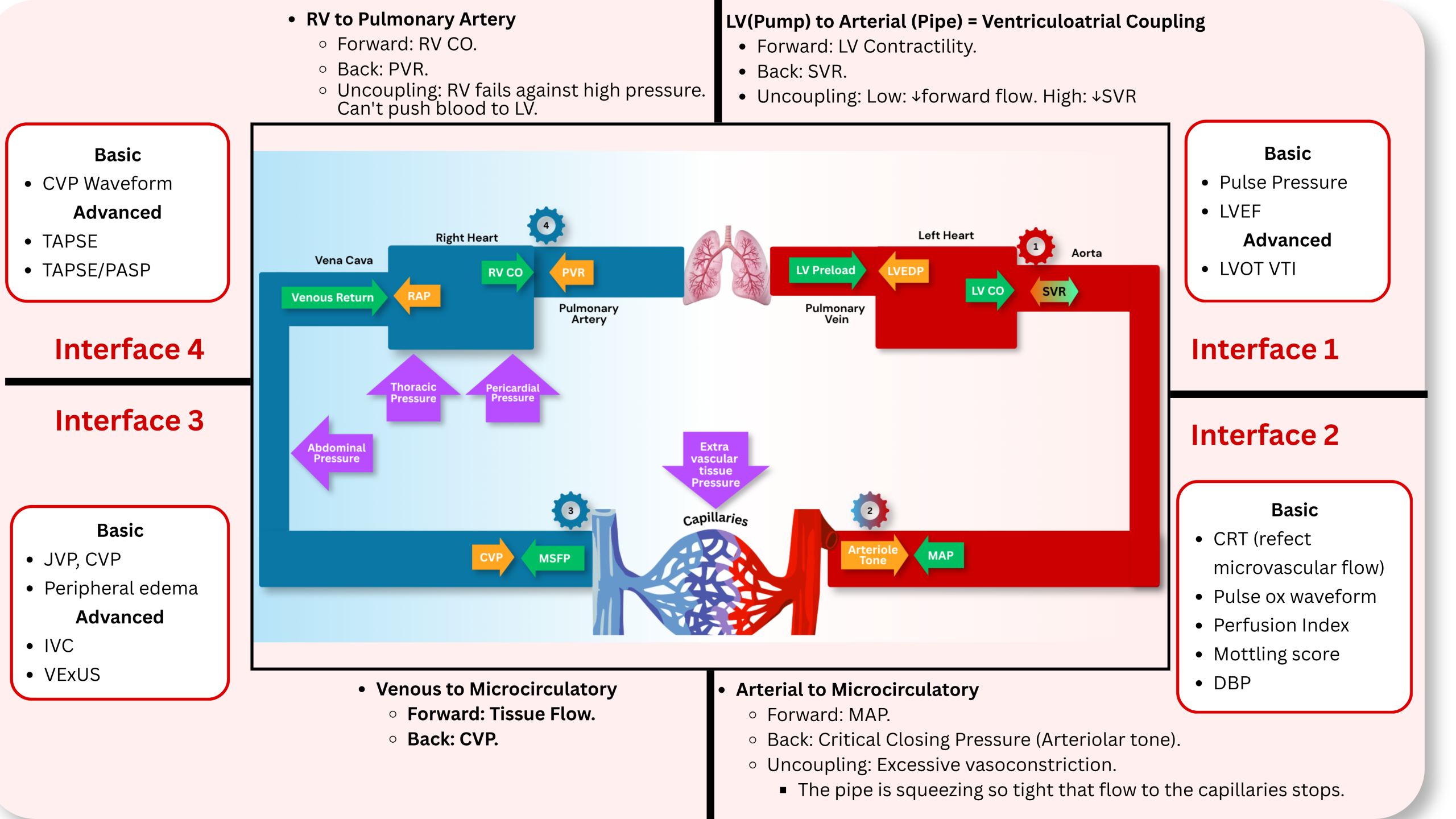
Table 1 provides a comprehensive breakdown of all four interfaces (plus the diastolic sub-interface Ia). For each interface, it lists the core question, key variables (forward, back, and external pressures), bedside assessment tools, and the corresponding management principles with explicit labels for whether the state represents uncoupling or failure without uncoupling.
📊Use this table as your bedside checklist to systematically assess every complex shock patient.
📊 Table 1. The Four Circulatory Interfaces — The “Weakest Link” Framework ▼ click to expand/collapse
| Interface | Core Question | Key Variables | Bedside Tools | Clinical Management Principles |
|---|---|---|---|---|
| I. LV → Arteries |
⚙️ Is the pump pushing blood forward?
(Assess coupling & failure)
|
⬆ Forward: LV CO, SV ⬇ Back: SVR |
POCUS
LVEF (reflects coupling),
LVOT VTI (stroke volume) Vitals Pulse Pressure (SV surrogate)
📐 SVR: 80 × (MAP − RAP) / CO — low SVR = vasodilation (warm); high SVR = vasoconstriction (cold)
|
• Low SV + Low SVR (Warm) → Fluids (if preload responsive) (Failure without uncoupling) • Low SV + High SVR (Cold) → Avoid vasopressors → Inotropes (Uncoupling: Ea/Ees > 1.0) |
| Ia. LV Preload → LVEDP |
🫀 Is the LV stiff? Will volume help or hurt?
(Assess diastolic function)
|
⬆ Forward: LV Preload ⬇ Back: LVEDP |
POCUS
LV size, E/e’ ratio (LVEDP surrogate), B-lines (pulmonary congestion) Physical JVP (RAP surrogate), crackles |
• Poor compliance (steep curve): Small volume shifts cause big pressure changes. (Failure of diastolic function) • Very sensitive to fluids AND diuresis. • May need higher RAP to overcome elevated LVEDP. |
| II. Arterioles → Capillaries |
🩸 Is flow reaching the tissues? (Coherence)
(Assess microcirculatory failure)
|
⬆ Forward: MAP ⬇ Back: Pcc (Critical Closing Pressure) |
Physical
CRT (microcirculatory flow), Mottling, Mentation, Distal skin temperature Labs Lactate (tissue hypoxia / stress) Monitor Perfusion Index (PI) (peripheral arterial flow) |
• CRT improves with intervention → Coherence intact (No failure) • CRT does NOT improve → Microcirculatory failure → Consider vasodilators, inotropes, or source control (Failure of coherence; consider incoherence) |
| III. Capillaries → Venules |
🚰 Is the drain backed up? (Choking tissues)
(Assess venous congestion)
|
⬆ Forward: MSFP ⬇ Back: CVP / RAP ⬌ External: PEEP, tamponade, IAP |
Physical
JVP (RAP surrogate) POCUS IVC (RAP surrogate), VExUS (organ congestion), Femoral Vein Doppler |
• CVP is tissue afterload, NOT preload. (Failure of venous drainage) • CVP > 10–12 chokes organ perfusion. • Goal: Lower CVP (diuresis, RV support, afterload reduction). |
| IV. RV → Pulmonary Artery |
💔 Is the RV failing due to afterload?
(Assess RV-PA coupling)
|
⬆ Forward: RV CO ⬇ Back: PVR |
POCUS
TAPSE/PASP ratio (<0.31 = uncoupling), RV size/function, RVOT Doppler Physical Elevated JVP (RAP / congestion), edema |
• RV is exquisitely afterload-sensitive. • Volume only helps if PVR is normal (e.g., RV infarct). (Failure without uncoupling; coupling intact) • High PVR (PE, PH): Volume hurts. Need PVR reduction. (Uncoupling: Ees/Ea ratio abnormal) |
† SVR Calculation: SVR = 80 × (MAP − RAP) / CO. Normal range: 800–1200 dynes·sec·cm⁻⁵. Low SVR (< 800) indicates vasodilation (warm); high SVR (> 1200) indicates vasoconstriction (cold).
⎮Bedside Distinction: Uncoupling vs. Failure without Uncoupling
- Now that we understand the concepts, how do we distinguish uncoupling from failure at the bedside? The answer lies in integrating POCUS with clinical markers.
⚙️ The Takeaway: Uncoupling → Inotropes / Afterload Reduction. Failure without Uncoupling → Fluids / Vasopressors / Diuresis.
Interface Interactions: How the Interfaces Connect
⚙️The four interfaces do not function in isolation. They are connected in series—failure at one interface propagates forward or backward along the circulatory chain. Understanding these interactions is essential for managing complex, deteriorating patients *.
🔑 Key Interactions:
-
Interface II (Arterioles → Capillaries) reflects the adequacy of Interface I (LV → Arteries) and Interface IV (RV → PA).
-
If CRT is prolonged or lactate is elevated, it suggests the pump (I) or the right heart (IV) is not delivering adequate flow. Poor tissue perfusion is a red flag for pump failure.
-
-
Interface III (Capillaries → Venules) helps distinguish acute vs. chronic RV failure (Interface IV).
-
In acute RV failure (e.g., PE), the RV cannot compensate, and CVP rises sharply. In chronic RV failure (e.g., pulmonary hypertension), the RV may tolerate high pressures, and CVP may be elevated but stable. The trajectory of CVP and VExUS tells you whether the RV is compensating or failing.
-
-
Interface II and III are the inflow and outflow of the microcirculation.
-
Interface II delivers blood to the tissues; Interface III drains it away. If either is compromised, microcirculatory flow fails—regardless of macrocirculatory parameters.
-
-
Interface IV (RV → PA) affects Interface I (LV → Arteries) in two ways:
-
RV failure decreases LV preload (less blood delivered to the LV).
-
RV dilation shifts the interventricular septum, compressing the LV and reducing LV compliance. RV failure directly impairs LV function.
-
-
Interface I (LV → Arteries) failure causes backward pressure that worsens Interface IV (RV → PA).
-
LV failure → elevated left atrial and pulmonary pressures → increased RV afterload → RV failure. A failing LV will eventually “muck up” the RV.
-
💡The clinical pearl: Do not treat interfaces in isolation. A finding at one interface often points to dysfunction at another. Use these interactions to anticipate propagation of failure—and to guide sequential, physiologically coherent therapy.
Key Insights From Four-Interface Model
💡The four-interface framework provides several practical insights that directly inform clinical decision-making.
- CVP is NOT preload. It is the tissue afterload.
- This is the most paradigm-shifting concept in the entire framework *.
- The presence of a significantly elevated CVP (likely values over 10–12) may uncouple interface III and potentially contribute to tissue hypoperfusion irrespective of the cause. For example, a patient with a MAP of 70 and CVP of 15 has a perfusion pressure of 55—significantly lower than the MAP suggests.
- When you see a high CVP, you should think: This is a pressure that is actively choking off organ perfusion. Your goal should be to lower it, not to interpret it as a sign of “full tank” that justifies more fluids.
- This is the most paradigm-shifting concept in the entire framework *.
- The RV is the weak link.
- Unlike the LV, which can tolerate increases in afterload, the RV is exquisitely sensitive. In patients with elevated PVR (PE, pulmonary hypertension), volume resuscitation is harmful. It dilates the RV, shifts the interventricular septum, decreases LV preload, and drops cardiac output. In these patients, the therapy is to reduce PVR (with pulmonary vasodilators) or offload volume, not to give more fluids.
- LVEDP matters in every fluid decision.
- Patients with a stiff, non-compliant LV (diastolic dysfunction, LVH, AS) are on a knife’s edge. A small fluid bolus can cause a massive rise in LVEDP, precipitating pulmonary edema *.
- Conversely, a small diuresis can drop LVEDP too far, causing a precipitous drop in BP. These patients require meticulous, slow titration of therapy, not large boluses or aggressive diuresis.
- Hemodynamic coherence is the goal.
- Interface II reminds us that improvements in macrocirculation (MAP, CO) do not always translate to improvements in microcirculation (tissue perfusion).
- Evaluation:
- CRT is your best bedside tool to assess coherence.
- If CRT improves with your intervention, you are on the right track. If it does not, you need to reconsider your strategy; you may be treating the numbers, not the tissues.
- Other tools can help confirm coherence or identify its loss:
- Perfusion Index (PI): A rise during resuscitation suggests improved peripheral flow *.
- Mottling Score: Persistent mottling despite normalized MAP indicates severe microcirculatory failure *.
- Veno-Arterial PCO₂ Gap: An elevated gap with normal CO suggests capillary hypoperfusion *.
- Lactate: Persistent elevation despite normalized macrocirculation is a strong sign of persistent microcirculatory dysfunction & ongoing tissue hypoxia *.
- CRT is your best bedside tool to assess coherence.
The Dynamic Tool – The Forrester-Kenny Diagram
We now have a systematic way to assess the four interfaces. But how do we synthesize this information into a rapid, actionable plan at the bedside?
◾️The Forrester-Kenny Diagram (adapted from Kenny et al.) provides an elegant solution. It is a 2×2 grid that integrates the two most clinically relevant variables:
- X-Axis: Forward Flow (Cardiac Output) – Assessed clinically as “Warm” (normal/high CO) vs. “Cold” (low CO). You can assess this using skin temperature, CRT, pulse pressure, and LVOT VTI on POCUS.
- Y-Axis: Venous Congestion – Assessed clinically as “Wet” (congested) vs. “Dry” (not congested). You can assess this using JVP, IVC size, VExUS score, and pulmonary B-lines on lung US.
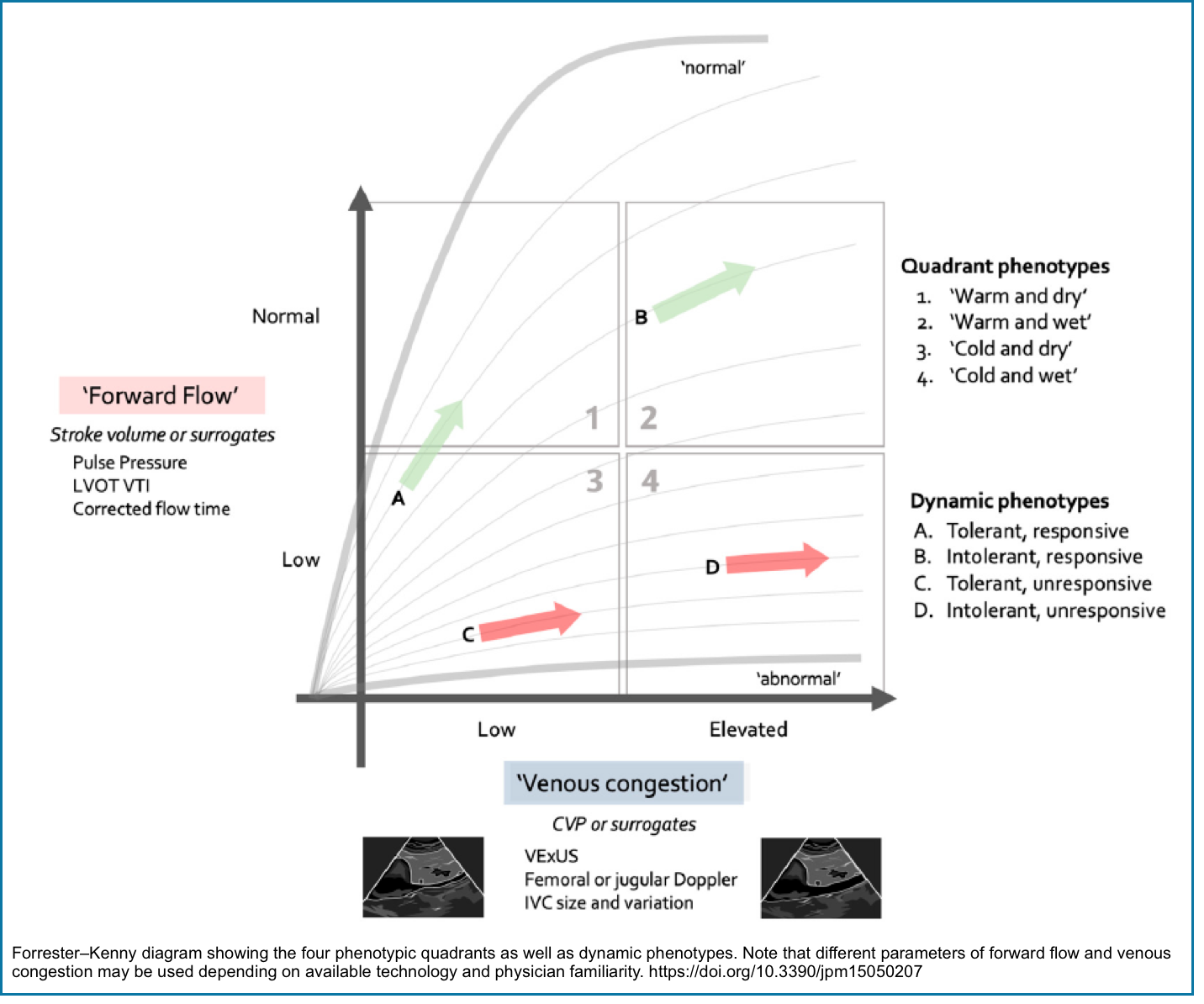
The Forrester-Kenny Diagram. This dynamic phenotyping tool integrates forward flow (Warm vs. Cold) and venous congestion (Wet vs. Dry) to guide initial therapy. The four quadrants represent distinct hemodynamic states, each with a specific action plan.
- The table below provides a detailed breakdown of each quadrant, including clinical examples, actionable interventions, and the underlying physiology—specifically, whether the state represents uncoupling (e.g., cold & wet with high SVR) or failure without uncoupling (e.g., cold & dry with low preload).
📊Use this as your rapid bedside guide to phenotype and treat every shock patient.
QUADRANT 1 (Warm & Dry)
How to Use This at the Bedside
- At first contact, place the patient in one of the four quadrants. This dictates your first major therapeutic decision.
- After each intervention (fluids, vasopressors, inotropes), reassess and re-plot the patient. Your goal is to move them toward Quadrant 1 (Warm & Dry).
- If the patient is not moving toward Quadrant 1, use the Four-Interface Model to systematically search for the weakest link(s).
New Clinical Workflow
We now have all the pieces. Here is how to integrate them into a seamless clinical workflow for the complex shock patient.
🆘 Step 1: Immediate Stabilization
-
Secure the airway and breathing.
-
Establish large-bore IV/IO access.
-
Perform the CRUSH exam (<30 seconds) for the actively crashing patient to rapidly rule out immediate life threats: Heart (effusion/chamber size), IVC (qualitative), Morrison’s (free fluid), Aorta (AAA), Pulmonary (tension pneumothorax).
-
Treat immediately life-threatening causes identified on CRUSH exam (tension pneumothorax, tamponade, hemorrhage).
-
Do not delay vasopressors for fluid resuscitation in patients with overt hypotension.
-
Source control is paramount. No hemodynamic therapy will work without it.
📊Step 2: Phenotype with the Forrester-Kenny Diagram
- In the first 5-10 minutes, determine if the patient is Warm or Cold (skin, CRT, pulse pressure).
- Determine if the patient is Wet or Dry (JVP, IVC, B-lines).
- Plot the patient on the grid. This gives you your initial therapeutic strategy.
✴️ Step 3: Assess the Four Interfaces
-
Now, go systematically through the Four-Interface Master Table (above).
-
To perform this assessment efficiently and in a structured manner, the I‑RUSH (Interface‑Informed RUSH) exam provides a standardized POCUS protocol. Developed by Scott Weingart and based on the four-interface model, the I‑RUSH exam guides you through the key ultrasound views needed to evaluate each interface, measure critical variables like LVOT VTI and TAPSE, and assess for venous congestion. It is designed for the complex, deteriorating patient who requires a physiology-based approach, as outlined in Step 3 of this workflow.
-
Understanding what each bedside tool actually reflects is essential for accurate interpretation and targeted therapy. See the following complementary table to know what each tool actually measures.
🔬 What Does Each Tool Actually Measure? ▼ click to expand/collapse
| Interface | Tool | What It Actually Reflects | Abnormal Value | Clinical Implication |
|---|---|---|---|---|
|
🫀 I. LV → Arteries |
📊 LVEF | Ventriculo-arterial coupling (not contractility) | — | In vasodilation, LVEF may look normal despite impaired contractility. |
| 🌊 LVOT VTI | Stroke volume (forward flow) | < 18 cm or > 22 cm |
Low VTI (< 18) → Low SV vs high SVR vs MR. High VTI (> 22) → Vasoplegia vs high-output HF vs AI. |
|
| 📈 Pulse Pressure | Stroke volume surrogate (affected by aortic compliance) | < 30 mmHg or > 60 mmHg |
Narrow PP (< 30) suggests low CO state (e.g., cardiogenic, late septic/hypovolemic shock). Wide PP (> 60) suggests high CO state (e.g., early septic/hemorrhagic shock, aortic regurgitation, AV fistula, PDA). |
|
| 📐 SVR (calculated) |
Vascular resistance (afterload)
📐 SVR = 80 × (MAP − RAP) / CO
|
< 800 or > 1200 | 🔵 Low SVR (< 800) = vasodilation (warm); 🔴 High SVR (> 1200) = vasoconstriction (cold) | |
|
🫀 Ia. LV Preload → LVEDP |
📊 E/e’ ratio | LV filling pressure (surrogate for LVEDP) | > 14 (average) | Elevated E/e’ suggests elevated LVEDP (diastolic dysfunction). |
| 🌊 B-lines (Lung US) | Extravascular lung water (surrogate for elevated LAP) | — | Diffuse B-lines suggest pulmonary congestion. | |
|
🩸 II. Arterioles → Capillaries |
⏱️ CRT | Peripheral microcirculatory flow | > 3 seconds | Prolonged CRT indicates microcirculatory failure. |
| 🎨 Mottling | Heterogeneous skin vasoconstriction (microcirculatory shutdown) | — | Persistent mottling despite normalized MAP suggests severe microcirculatory dysfunction. | |
| 🧪 Lactate | Tissue hypoxia / stress metabolism | — | Elevated lactate suggests hypoperfusion or stress response. | |
| 📊 Perfusion Index (PI) | Peripheral arterial flow | < 1.4 (or < 0.6 high risk) | Low PI indicates poor peripheral perfusion. | |
| 📊 Veno-Arterial PCO₂ Gap | Tissue perfusion adequacy (metabolic marker of flow) | > 6 mmHg | Elevated gap (> 6 mmHg) with normal CO suggests capillary hypoperfusion (loss of coherence). | |
|
🚰 III. Capillaries → Venules |
📊 CVP / JVP | Right atrial pressure (back pressure) | > 10–12 mmHg | Elevated CVP suggests venous congestion. |
| 📊 VExUS | Venous congestion (organ-specific) | Grade ≥ 2 | Graded score predicts organ congestion. Performed when IVC is plethoric to assess severity and guide management. | |
| 📊 IVC | RAP surrogate (gatekeeper for venous congestion assessment) | > 2.0 cm with < 50% collapse suggests elevated RAP. |
A plethoric IVC is a key indicator of venous congestion and should trigger further assessment (VExUS) to determine the cause—whether volume-driven, cardiac-driven, or mixed. A small, collapsible IVC effectively rules out significant venous congestion. |
|
| 📊 Portal Vein Doppler | Venous congestion pattern (pulsatility) | Pulsatile flow (spectral waveform with retrograde or phasic flow) |
Pulsatile portal vein is a sensitive marker of volume overload, especially when interpreted with IVC and LV function. With normal LV function, it suggests fluid-driven congestion (responsive to diuresis). With impaired LV function, it suggests mixed cardiac + volume congestion, requiring reassessment of both. |
|
|
💔 IV. RV → PA |
📊 TAPSE/PASP | RV-PA coupling (balance of RV contractility and pulmonary afterload) |
< 0.31 to < 0.36 (cutoff varies by context) |
Lower ratio suggests RV-PA uncoupling, a strong predictor of poor outcomes in HF, PH, and valvular disease. Context-dependent cutoff. |
| 📐 RV size/function | RV systolic function | — | Dilated/hypokinetic RV suggests RV failure. |
SVR Calculation: SVR = 80 × (MAP − RAP) / CO. Normal range: 800–1200 dynes·sec·cm⁻⁵. 🔵 Low SVR (< 800) = vasodilation (warm); 🔴 High SVR (> 1200) = vasoconstriction (cold).
Veno-Arterial PCO₂ Gap: Normal < 6 mmHg. Elevated gap (> 6 mmHg) with normal CO suggests capillary hypoperfusion (loss of coherence).
💉Step 4: Intervene Based on Physiology
- Identify the weakest link(s):
- Is it a failure of forward flow (Interface I)?
- A failure of coherence (Interface II)?
- A failure of drainage (Interface III)?
- Or a failure of the RV (Interface IV)?
- Choose your therapy based on the weakest link, NOT just the category of shock.
- Warm & Wet (Quadrant 2): Stop fluids. Add vasopressors.
- Cold & Dry (Quadrant 3): Give fluids/inotropes.
- Cold & Wet (Quadrant 4): Avoid vasopressors. Start inotropes. Consider diuresis.
- High LVEDP (Interface Ia): Titrate fluids/diuretics carefully. Small changes matter.
- High CVP (Interface III): Target therapies to lower CVP (diuresis, RV support).
- High PVR (Interface IV): Avoid volume. Consider pulmonary vasodilators.
♻️Step 5: Reassess (The Most Important Step)
- Re-evaluate after every intervention (this is the most important step). This emphasizes the dynamic nature of resuscitation.
- Re-plot the patient on the Forrester-Kenny diagram.
- Re-check the CRT and lactate.
- Is the patient moving toward Quadrant 1?
- If not, go back to Step 3 and reassess the interfaces. You may have missed a second (or third) weak link.
📊 Table 3. Old vs. New Framework — A Paradigm Shift in Approach ▼ click to expand/collapse
The new framework does not replace the old. It expands upon it, providing a more granular, physiology-based approach for the complex, deteriorating patient.
✅ Upgrade your mental model. Don’t discard it.
⚙️ The key insight: Uncoupling ≠ failure without uncoupling. Distinguishing these mechanisms guides therapy.
Conclusion – The Art of Resuscitation
The framework presented here is not a replacement for your existing knowledge. It is an upgrade. It acknowledges the complexity of the patients we treat and provides a systematic, physiology-based path through the “now what?” moments.
🔑The key takeaways are:
-
Shock is a failure of forward flow, not just hypotension. A normal blood pressure can be misleading.
-
Tissue perfusion is the net result of forward, back, and external pressures.
-
There are four critical pressure interfaces in the circulatory chain. Your job is to find the weakest link(s)—and understand how they interact—and intervene at that level.
-
CVP is tissue afterload, not preload. CVP is a measure of tissue afterload—the pressure organs must drain against.”
-
A high CVP chokes organ perfusion. Lowering elevated CVP is a therapeutic goal under specific circumstances.
-
-
The RV is exquisitely afterload-sensitive. Volume only helps if PVR is normal (e.g., RV infarction). High PVR (PE, PH): volume hurts.
-
The Forrester-Kenny Diagram is a rapid bedside tool to phenotype the patient, guide initial therapy, and track progress.
-
Hemodynamic coherence is the ultimate goal. If CRT improves with your intervention, you are on the right track. If not, reassess.
💡The key distinction: Remember the difference between uncoupling (abnormal Ea/Ees ratio) and failure without uncoupling (e.g., hypovolemia). Treat the mechanism, not just the label.
📍This is the art of resuscitation. It requires a deep understanding of physiology, a systematic approach to assessment, and the humility to reassess and adapt.
Clinical Vignette 1
🛡️ 1. Immediate Stabilization ▼ click to expand
• Do not blindly target MAP 65 — she is already at 70. The goal is restoring tissue perfusion, not just the number.
🔍 2. Phenotype: Forrester-Kenny ▼ click to expand
• Wet vs. Dry: Flat JVP, collapsed IVC, no B-lines → Dry
• Quadrant: Warm & Dry (Quadrant 1) — fluids are the initial therapy.
🫀 3. Assess the Four Interfaces ▼ click to expand
💉 4. Intervene ▼ click to expand
• Monitor response: CRT, lactate, MAP.
🔄 5. Reassess ▼ click to expand
• If CRT had NOT improved: Would suggest hemodynamic incoherence — microcirculation failing independently of macro-circulation. Would prompt reassessment of the four interfaces and consideration of advanced therapies.
💡 The Clinical Pearl ▼ click to expand
• Shock Index is 0.82 (< 1.0) — this is not surprising in compensated shock.
• Sympathetic drive can maintain blood pressure and a “normal” SI while tissue hypoperfusion is already present.
• SI < 1.0 does NOT exclude shock — especially in patients with preserved blood pressure.
• CRT and lactate are more sensitive markers in this scenario.
The four-interface framework identified the weakest link (Interface II — failure of hemodynamic coherence) and guided a fluid challenge that improved tissue perfusion.
Treat the physiology, not the number.
Clinical Vignette 2
Reading More:
- RECAPEM
- Hemodynamic Insight #1: What Are We Really Measuring?
- Advancing Concepts in Shock Physiology (EMCrit)
- Panel: 4 Quadrant Hemodynamic Ultrasound Integration, IVC Ultrasound and Much More! (EMCrit)
- The Realm of Tissue Perfusion: Systemic Hypoperfusion and Congestion.
- Echocardiography In The Contemporary Hemodynamic Monitoring
- Hypervolemia- ABC of Deresuscitation- VExUS Score
- Undifferentiated Shock: Approach to Diagnosis and Stabilization in ED.
- EMCrit
Media
- Shock interfaces with Dr. Rola
References
1. PMID: 40423078. Rola P, Kattan E, Siuba MT, Haycock K, Crager S, Spiegel R, Hockstein M, Bhardwaj V, Miller A, Kenny JE, Ospina-Tascón GA, Hernandez G. Point of View: A Holistic Four-Interface Conceptual Model for Personalizing Shock Resuscitation. J Pers Med. 2025 May 20;15(5):207. doi: 10.3390/jpm15050207.
2. Sara Crager: Reframing Shock: Bridging the Gap Between Theory and Practice, Emergency Medicine Clinics of North America, Volume 44, Issue 2,
2026, Pages 315-331, ISSN 0733-8627, ISBN 9780443428494, https://doi.org/10.1016/j.emc.2025.09.003. (https://www.sciencedirect.com/science/article/pii/S0733862725000847).
3. PMID: 26729241. Ince C. Hemodynamic coherence and the rationale for monitoring the microcirculation. Crit Care. 2015;19 Suppl 3(Suppl 3):S8. doi: 10.1186/cc14726. Epub 2015 Dec 18.
4. PMID: 39261939. Sun X, He H, Xu M, Long Y. Peripheral perfusion index of pulse oximetry in adult patients: a narrative review. Eur J Med Res. 2024 Sep 11;29(1):457. doi: 10.1186/s40001-024-02048-3.
5. PMID: 37193993. Duranteau J, De Backer D, Donadello K, Shapiro NI, Hutchings SD, Rovas A, Legrand M, Harrois A, Ince C. The future of intensive care: the study of the microcirculation will help to guide our therapies. Crit Care. 2023 May 16;27(1):190. doi: 10.1186/s13054-023-04474-x.
6. Scott Weingart, MD FCCM. EMCrit 427 – Advancing Concepts in Shock Physiology. EMCrit Blog. Published on June 13, 2026. Accessed on June 20th 2026. Available at [https://emcrit.org/emcrit/shock-physiology/ ].
7. PMID: 34461974. Ltaief Z, Schneider AG, Liaudet L. Pathophysiology and clinical implications of the veno-arterial PCO2 gap. Crit Care. 2021 Aug 31;25(1):318. doi: 10.1186/s13054-021-03671-w. Erratum in: Crit Care. 2024 Apr 5;28(1):110. doi: 10.1186/s13054-024-04857-8.

Add comment